Government of Saskatchewan officials tour Nutrien Rocanville Mine
June 29, 2026, 1:20 pm
Ashley Bochek, Local Journalism Initiative Reporter
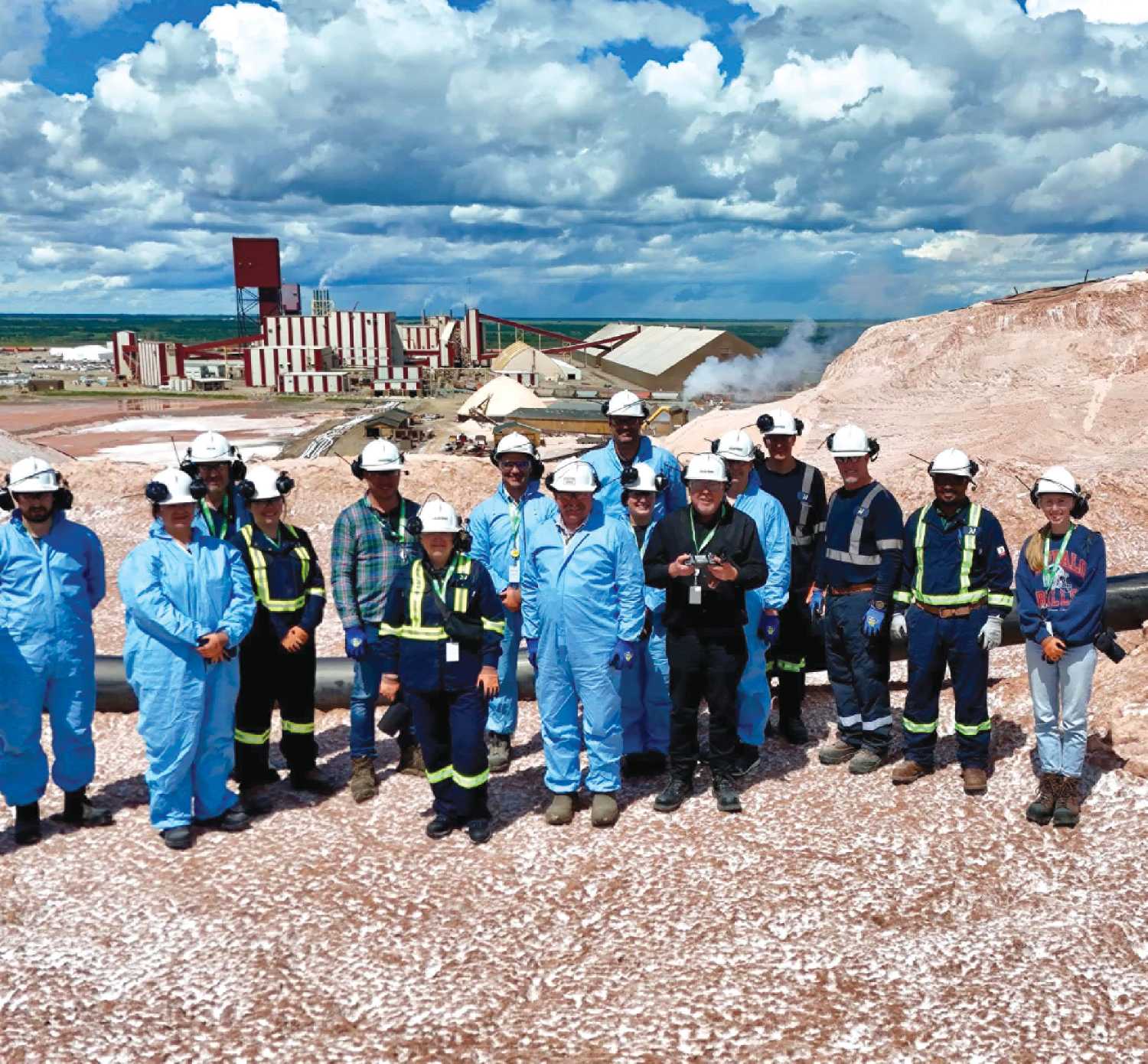

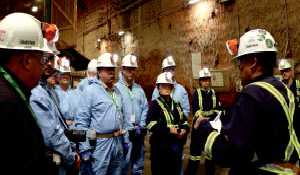
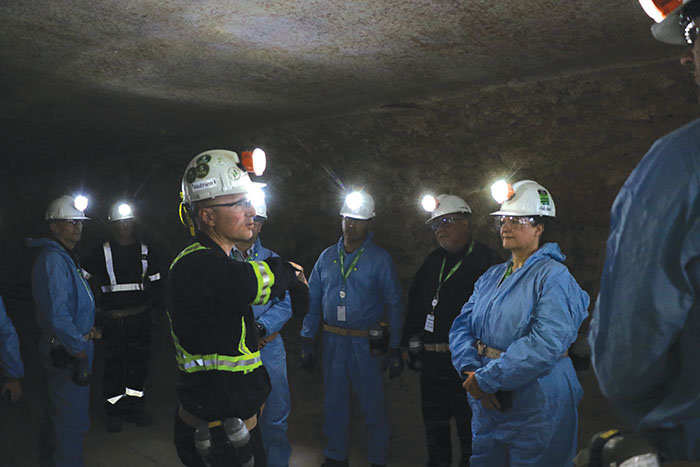
Nutrien Rocanville supervisors toured Saskatchewan Government officials at Nutrien Rocanville Potash Mine on Thursday, June 18.
The tour involved an underground tour a kilometre underground at Scissors Creek and a tour of the mill facility at Nutrien Rocanville.
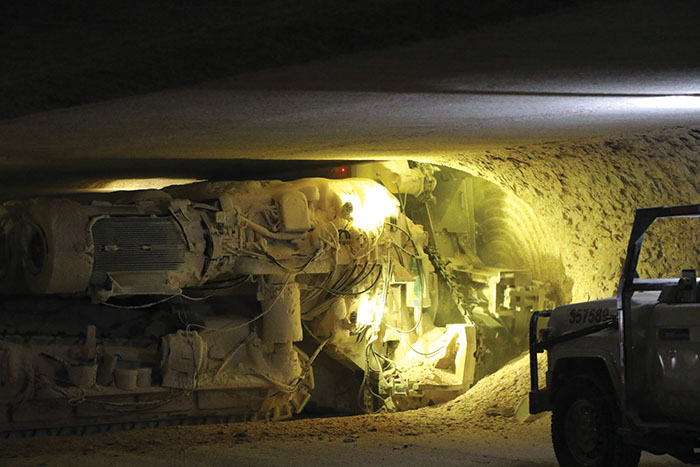
Nutrien Rocanville Potash Mine is the largest mine in the world both in terms of production and footprint, with an underground footprint the size of the city of Calgary.
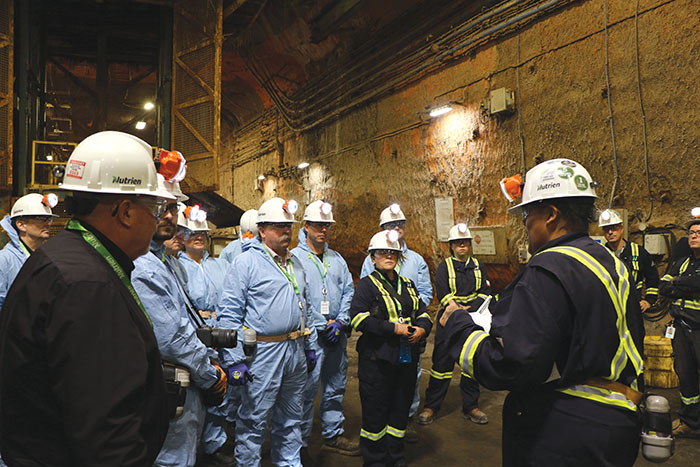
Last week’s visit provided an opportunity for government officials to see firsthand the innovation, technology and skilled workforce that drive Saskatchewan’s world leading potash sector.
Nutrien operates six potash mines in Saskatchewan, including the Rocanville facility. The mine was commissioned in 1970 and has undergone several expansions over time, including a $2.8 billion expansion completed in 2017. The company employs thousands of Saskatchewan residents and invests significantly in local communities.
“Rocanville is the world’s largest producing potash mine, and it reflects the strength of Saskatchewan’s potash sector and the people behind it,” Nutrien’s Upstream Potash and Phosphate Operations Senior Vice President Trevor Berg said.
“Across our six mines, every tonne we produce supports farmers around the world while contributing to jobs, local investment and economic growth.
“For more than 65 years, we have paired experience with innovation and advanced technology to deliver potash that helps feed a growing global population, and we are proud of the role we play in that work.”
Saskatchewan is the world’s largest potash-producing jurisdiction.
In 2025, the value of potash sales reached $9.3 billion, an increase of 18 per cent compared to 2024.
Over the past two decades, Saskatchewan potash companies have invested over $40 billion in mine operations, creating thousands of jobs and economic opportunities for Saskatchewan citizens and businesses.
Last year, Saskatchewan potash producers bought $2.2 billion in goods and services from Saskatchewan businesses.
Mining continues to be a cornerstone of Saskatchewan’s economy, driving investment, creating jobs and contributing to public services through royalties and taxes. Saskatchewan’s mineral resources are helping to meet growing global demand for critical minerals that are essential to food and energy security.
General Manager of Nutrien Rocanville Justin Young explains the size of the mine.
“To give you a perspective of how large the Rocanville mine is, not only are we the largest mine by production, but we’re also the largest by footprint.
“We are much larger than the city of Saskatoon, we are closer to the city of Calgary. One of the challenges with such a big footprint is you have to convey ore all the way from the far extents of the mine back to the shaft, so keeping everything running is a bit of a challenge, but it’s critical to the operation because that conveyor is your lifeline.
“Our speed limit underground is 40 kilometers per hour, so you can imagine driving from one side of the mine to the other.
“Those are just a couple of the challenges with the mine sprawl that we have. We’re able to load 24,000 tonnes in a day.”
Young explains the importance of Nutrien Rocanville for the whole world.
“Way back when Covid was happening we were looking at numbers because we were deemed an essential service at that time.”
“If we were to stop production of potash or fertilizer, you would see probably in a few years’ time a food shortage of up to 40 per cent of the entire population, and Rocanville, in one day, has a big role to play in generating food for our population.
“In one day alone, Rocanville provides enough potash for 750,000 acres of wheat, and that’s enough for all of the wheat production in Canada coming out of this facility in a month.
“We support enough production for a billion bushels of corn, and that’s enough for about 100 million people in a year.
“So when we were going through those Covid times, based on the increased yields that you see from fertilizer application, in Rocanville alone, we were making a lot of tons.
“Rocanville alone probably had an impact on about 900 million people, is what we figured out, which is pretty cool. It’s pretty powerful.
“It’s easy for me to get up and come to work every day, knowing that I have an impact on the globe, which is pretty cool,” said Young.
Tweet